South Eliot and the Town of Eliot, Maine: A Historic Village on the Piscataqua
On the quiet Maine shore of the Piscataqua River, just across the water from Portsmouth, New Hampshire, lies South Eliot — the riverside village of the historic town of Eliot. It is a place of colonial roots and rural calm, home to a nationally important spiritual retreat, a beloved century-old library, and a working farm museum. Here is a closer look at South Eliot and the town of Eliot, Maine.
A Village in the Town of Eliot
South Eliot is not a separate town but a village — a census-designated place of about 3,719 residents (2020) — within the larger town of Eliot, in York County. Eliot sits on the northern shore of the Piscataqua River, the tidal waterway that divides Maine from New Hampshire. For its first century and a half the area was the “Upper Parish” of Kittery, the oldest town in Maine; it was set off and incorporated as the independent town of Eliot in 1810. Today it remains an old, rural New England town of country roads, historic homes, and river views.
Green Acre on the Piscataqua
Eliot’s most nationally significant landmark is Green Acre Bahá’í School, a serene conference and retreat center on the banks of the Piscataqua. It was founded in 1894 by Sarah Jane Farmer as a place for the study of philosophy, peace, and the world’s religions, and after Farmer embraced the Bahá’í Faith it became the oldest permanent Bahá’í school in the world. ʻAbdu’l-Bahá, then head of the faith, visited Green Acre during his travels in America in 1912. Still active today, it is a tranquil riverside spot with a long history of bringing people together.
The William Fogg Library
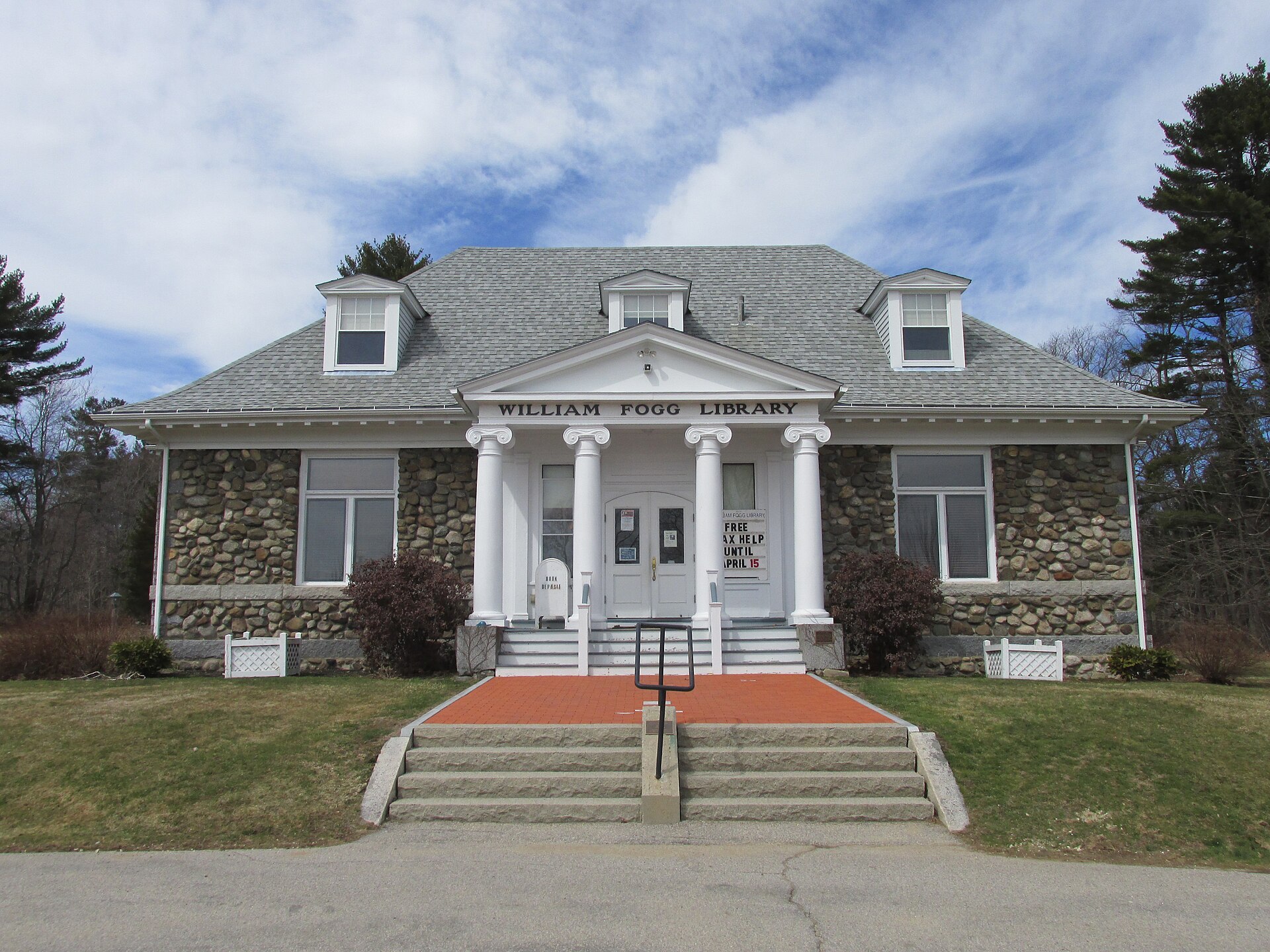
The handsome stone William Fogg Library is the pride of the village. The town’s first library was a private lending collection started by William Fogg; his son, the Harvard-educated Dr. John S. H. Fogg, later left his own books and a bequest to build a public library in his father’s memory. The result, completed in 1907 to a design by Boston architect C. Howard Walker — its walls said to be built from fieldstone gathered along the Fogg property — still serves as Eliot’s public library and has been on the National Register of Historic Places since 1991.
Raitt Homestead Farm Museum
For a taste of Eliot’s agricultural past, visit the Raitt Homestead Farm Museum, a 33-acre farm whose homestead dates to 1896. The Raitt family once made bricks, ran a sawmill, and grew apples here. Since 1996 the farm has hosted the popular Eliot Antique Tractor & Engine Show, where vintage tractors, hit-and-miss engines, and working farm machinery come clattering back to life — a beloved summer tradition and a living link to the region’s farming heritage.
The River and the Outdoors
The Piscataqua is central to life in Eliot. Along its winding tidal “Long Reach,” the river offers boating, paddling, and quiet spots to watch the tide, the working boats, and the birds of the estuary. Away from the water, Eliot’s country roads, town landing, and conservation lands invite unhurried exploring — the gentle, historic side of Maine’s busy southern coast.
Exploring the Area
South Eliot’s location makes it a fine base for the Maine–New Hampshire Seacoast. Just across the river lies Portsmouth, New Hampshire, with its historic downtown and Strawbery Banke Museum, while next door is Kittery — famous for its outlet shops and the granite Fort McClary. Up the southern Maine coast lie York and, further on, the rocky shore of Prouts Neck in Scarborough. Travelers heading inland toward the Kennebec Valley will find a kindred historic community in our own town of Winslow, where the colonial-era Fort Halifax has guarded the river since 1754.
Frequently Asked Questions
Where is South Eliot, Maine?
South Eliot is a riverside village in the town of Eliot, in York County, on the Piscataqua River in far southern Maine — directly across the water from Portsmouth, New Hampshire.
Is South Eliot its own town?
No. South Eliot is a village (a census-designated place) within the town of Eliot, which was incorporated in 1810 from a part of Kittery. The South Eliot village had about 3,719 residents in 2020.
What is Green Acre in Eliot, Maine?
Green Acre is a Bahá’í school and retreat center on the Piscataqua River, founded by Sarah Farmer in 1894. It is the oldest permanent Bahá’í school in the world and was visited by ʻAbdu’l-Bahá in 1912.
What is there to do in Eliot, Maine?
Visit the historic William Fogg Library, take in the Eliot Antique Tractor & Engine Show at the Raitt Homestead Farm Museum, enjoy the Piscataqua River, and explore nearby Portsmouth and Kittery.