Bass Harbor Head Light: Acadia’s Iconic Lighthouse on Mount Desert Island
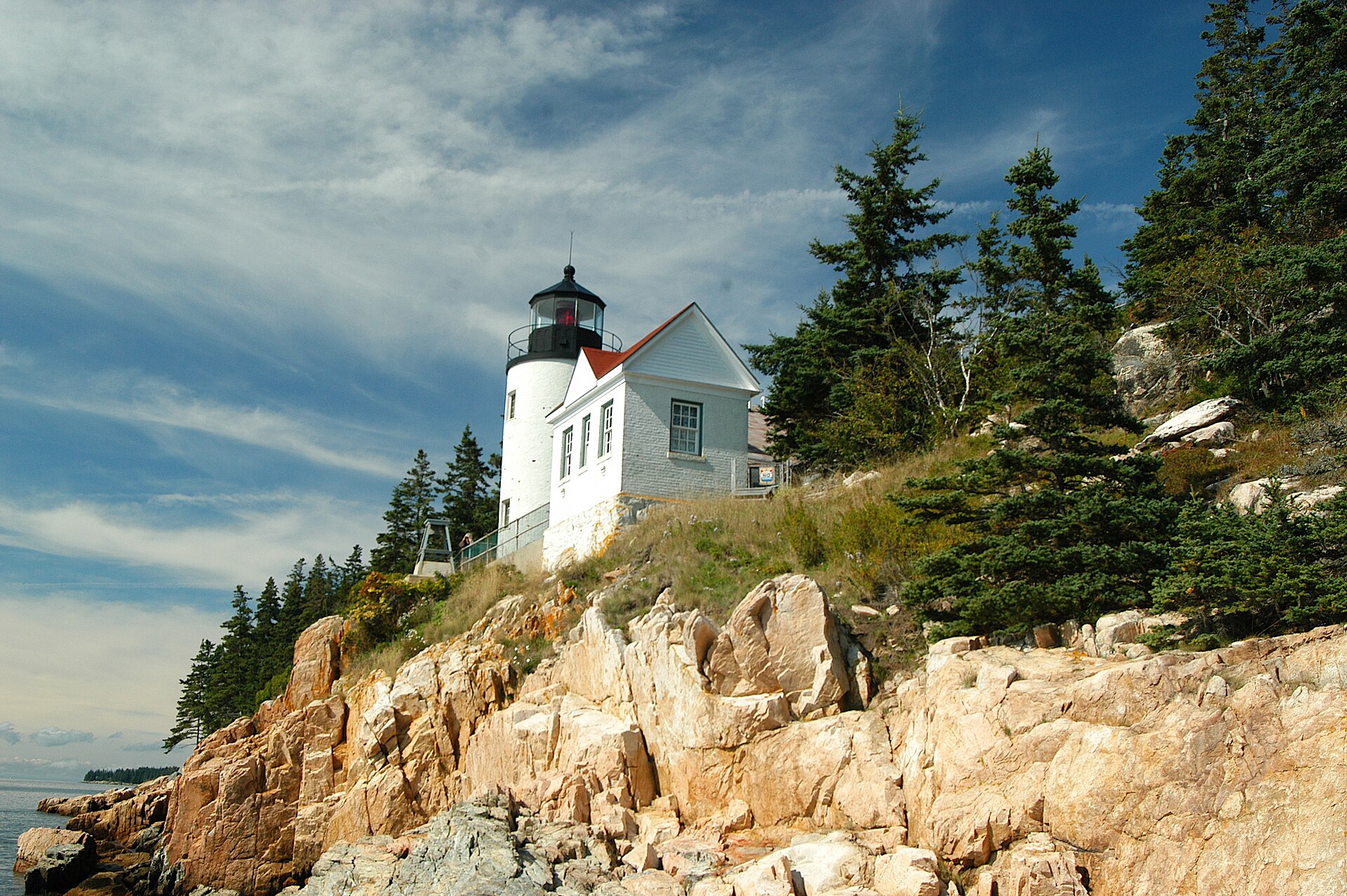
Perched on the rugged granite shore at the southwestern tip of Mount Desert Island, Bass Harbor Head Light is one of the most photographed sights in all of Acadia National Park. A small white tower and its keeper’s house stand above the surf, framed by dark spruce and pink stone — a scene that glows unforgettably at sunset. Here is a guide to the lighthouse, its history, and how to visit it.
A Light Since 1858
Bass Harbor Head Light has guided mariners since 1858. After Congress appropriated ,000 for it in 1855, the beacon was first lit on September 1, 1858, marking the entrance to Bass Harbor and Blue Hill Bay. (A common story that it was commissioned by President Grant in 1876 mixes it up with a fog-bell tower added that year, which has since been removed.) The 32-foot cylindrical brick tower is joined by a covered walkway to a wood-frame keeper’s house. Its original lamp was upgraded to a fourth-order Fresnel lens in 1901, and the station was automated in 1974.
The Lighthouse Today
Still an active aid to navigation, Bass Harbor Head Light shines a distinctive red light out over the water each night. For most of its life the station was a U.S. Coast Guard property, but in 2018 it was transferred to the National Park Service as part of Acadia National Park, ensuring that this beloved landmark will be cared for alongside the park’s other treasures. The keeper’s house is used as a residence and is not open to the public.
Visiting Bass Harbor Head Light
The lighthouse sits on the quieter western side of Mount Desert Island, in the town of Tremont, within Acadia. While you cannot go inside the tower or the house, two short paths lead to the best views: one to an overlook near the light itself, and a stairway down to the rocks below, where the classic photograph is taken. The small parking area fills quickly in summer, so it is worth arriving early or late in the day — which happens to be when the light looks its best.
The Most Photographed View
What makes Bass Harbor Head Light so special is its setting: the crisp white tower against dark rock, deep-green spruce, and the ever-moving sea. Photographers especially prize the view from the ledges below at sunset, when the low sun turns the granite gold and the sky to fire behind the tower. If you scramble down to the rocks, tread carefully — the granite can be wet and slippery, and the surf is powerful.
Exploring Acadia and Mount Desert Island
Bass Harbor Head Light is a perfect addition to any Acadia itinerary. The park is famous for Cadillac Mountain (the first place to see sunrise in the U.S. for part of the year), the scenic Park Loop Road, Thunder Hole, and Jordan Pond, while the island’s quieter west side holds Bass Harbor, Southwest Harbor, and elegant Northeast Harbor. To put this beacon in context, see our guide to Maine’s lighthouses. And far inland, along the Kennebec River, our own town of Winslow keeps watch over the water at colonial-era Fort Halifax.
Frequently Asked Questions
Where is Bass Harbor Head Light?
Bass Harbor Head Light is at the southwestern tip of Mount Desert Island, in the town of Tremont, within Acadia National Park, Maine. It marks the entrance to Bass Harbor and Blue Hill Bay.
When was Bass Harbor Head Light built?
It was built in 1858, first lit on September 1 of that year, after Congress appropriated funds in 1855. The tower was automated in 1974 and transferred to the National Park Service in 2018.
Can you go inside Bass Harbor Head Light?
No. The tower and keeper’s house are not open to the public, but two short trails let you view and photograph the lighthouse, including a stairway down to the rocks below.
When is the best time to photograph Bass Harbor Head Light?
Sunset is the classic time, when the light glows on the tower and granite. The view from the rocks below is the most famous; watch your footing, as the ledges can be slippery.